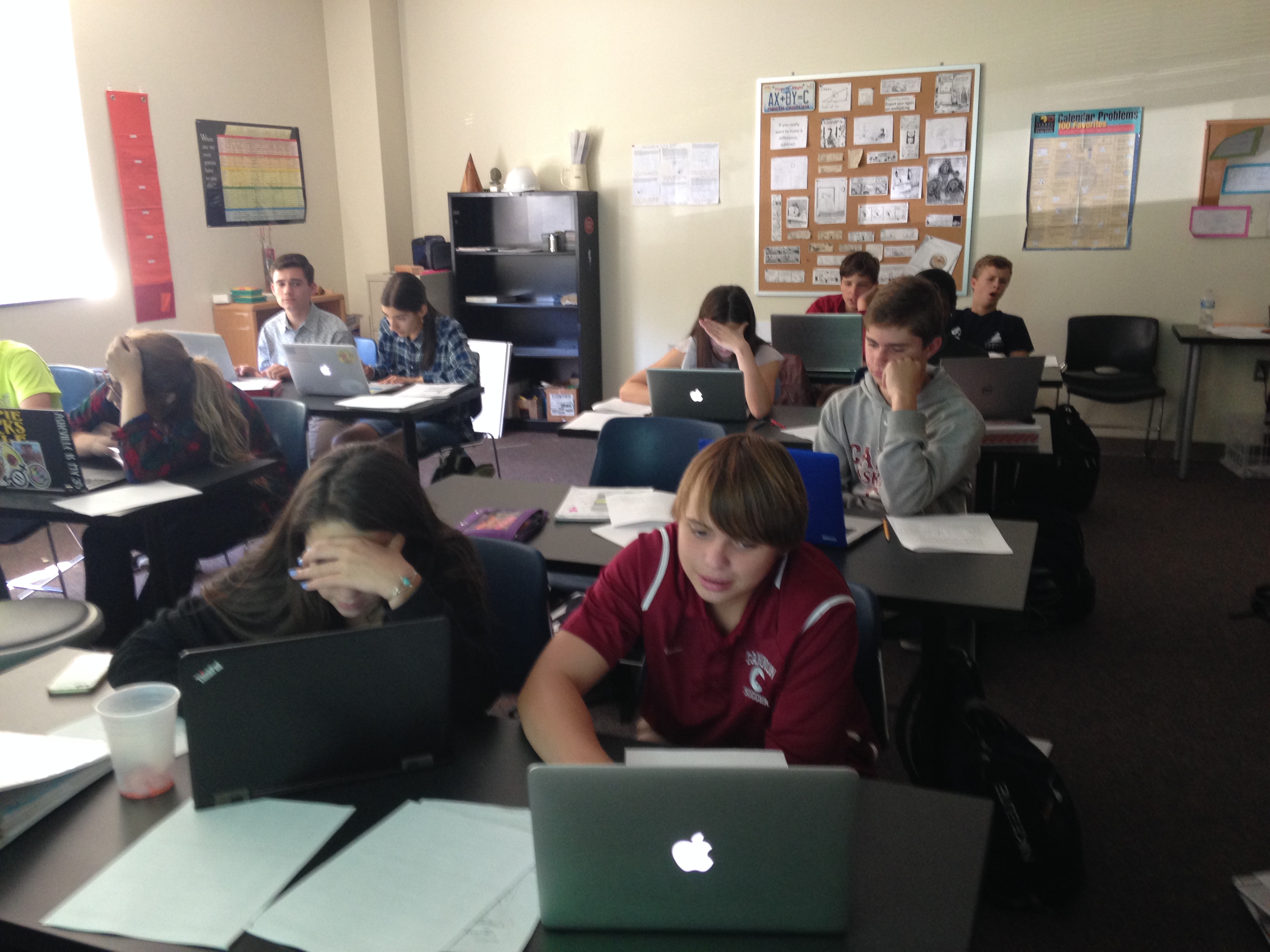
I really wanted to teach properties of parallel lines through investigation When I was working on my constructions unit using GeoGebra I found this great scaffolding worksheet for properties of parallel lines. I decided to try it so my students could discover and play around with parallel lines cut by any transversal. Some students figured out the sheet very quickly and others were extremely confused. I had students work on their own on GeoGebra but could work on the questions with a partner. This helped clear up a lot of confusion and created a lot of mathematical discussion.

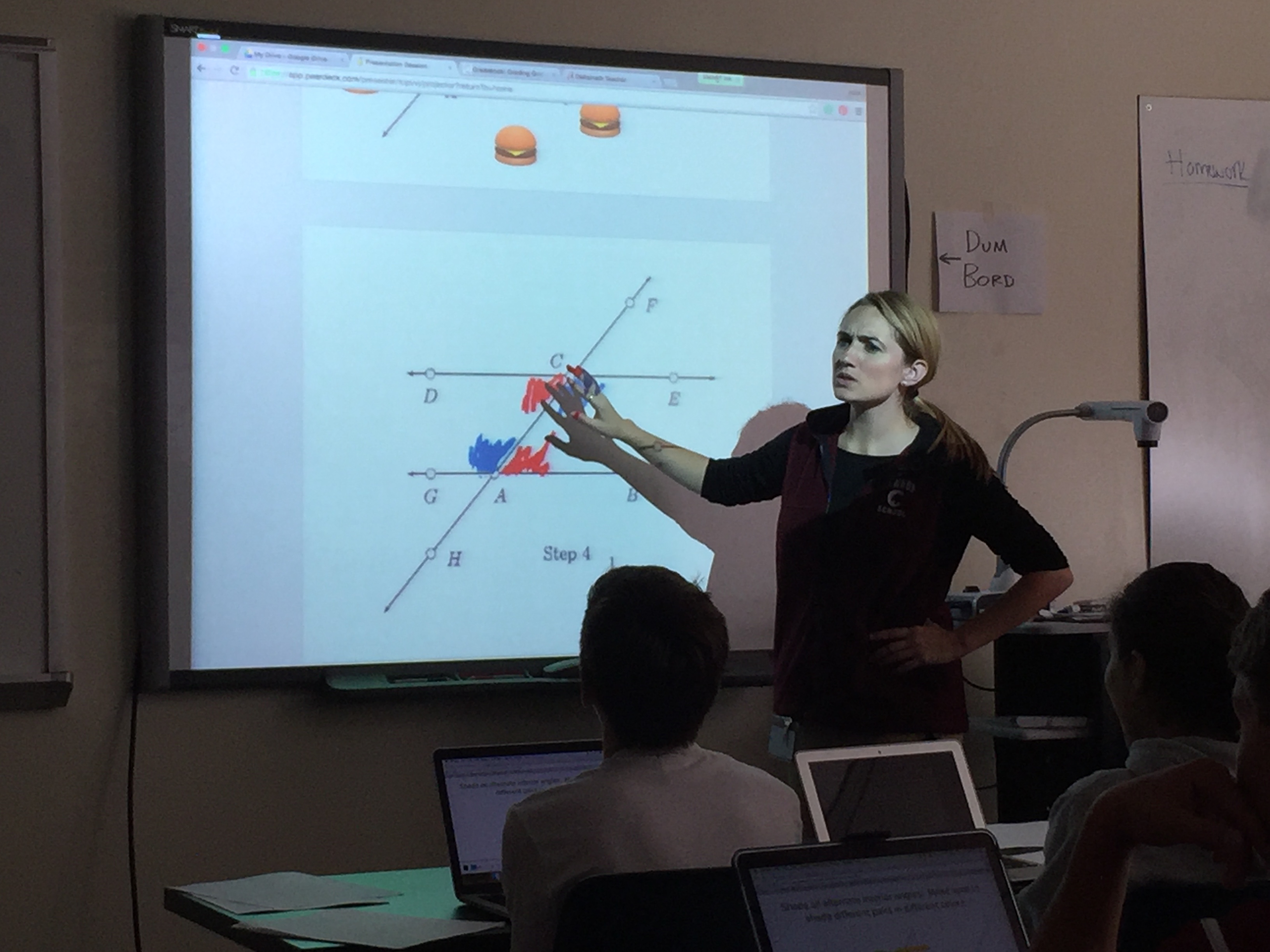
After they completed the geogebra investigation, all of my students got onto Pear Deck. I started my Pear Deck lesson with the question “what is a transversal? ” All students answered and I was able to scroll through their answers to see who understood the activity. We then came up with a definition together. Next I was able to discuss corresponding angles, alternate interior, alternate exterior, same side interior and exterior, and vertical angles. I wanted to see if my students understood where these angles were from the previous activity so I had them shade in their angles on Pear Deck. This lead to the discussion on why certain angles were there and which ones were congruent or supplementary. At the end of the Pear Deck I had students rank their understanding of the lesson and ask me a question. I did student takeaways so the entire Pear Deck lesson was sent to each of the students google drive, and I was able to go in and enter comments to answer their questions. SO COOL.


Day two of this lesson was introduced to me by Julie Reulbach. She suggested that I do Dance Dance transversal. In order to this I had to make 10 dance floors around my classroom (two parallel lines cut by the transversal) using tape. I suggest using painters tape! SO much easier to take off!
I wanted to clear up any misconceptions before we danced so I had students work with a partner and find a dance floor. I gave them each scraps of paper and they had to use them to label each type of angle. This gave me a chance to walk around and help students who were struggling and to see who really had a firm grasp on the lesson.

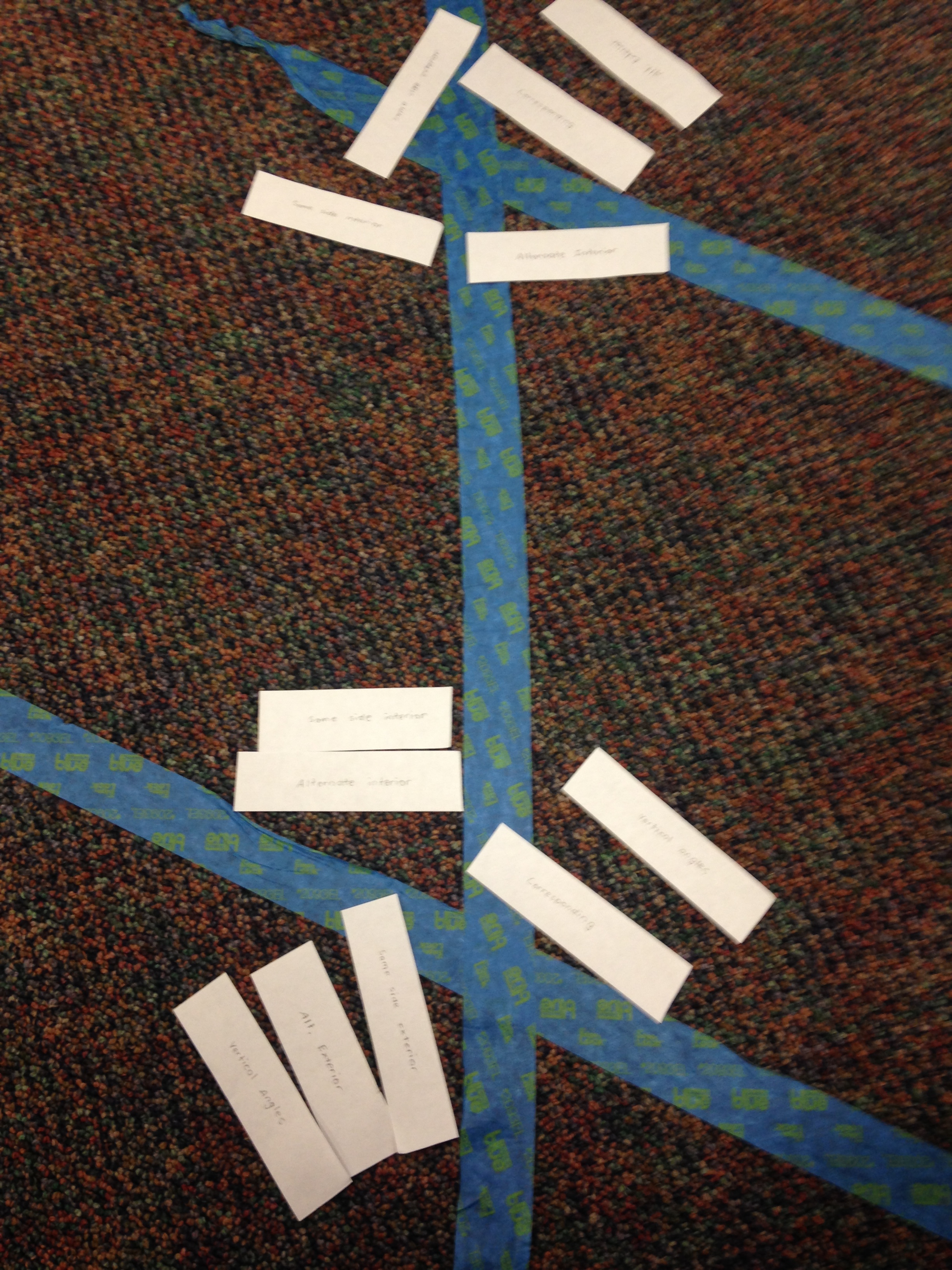
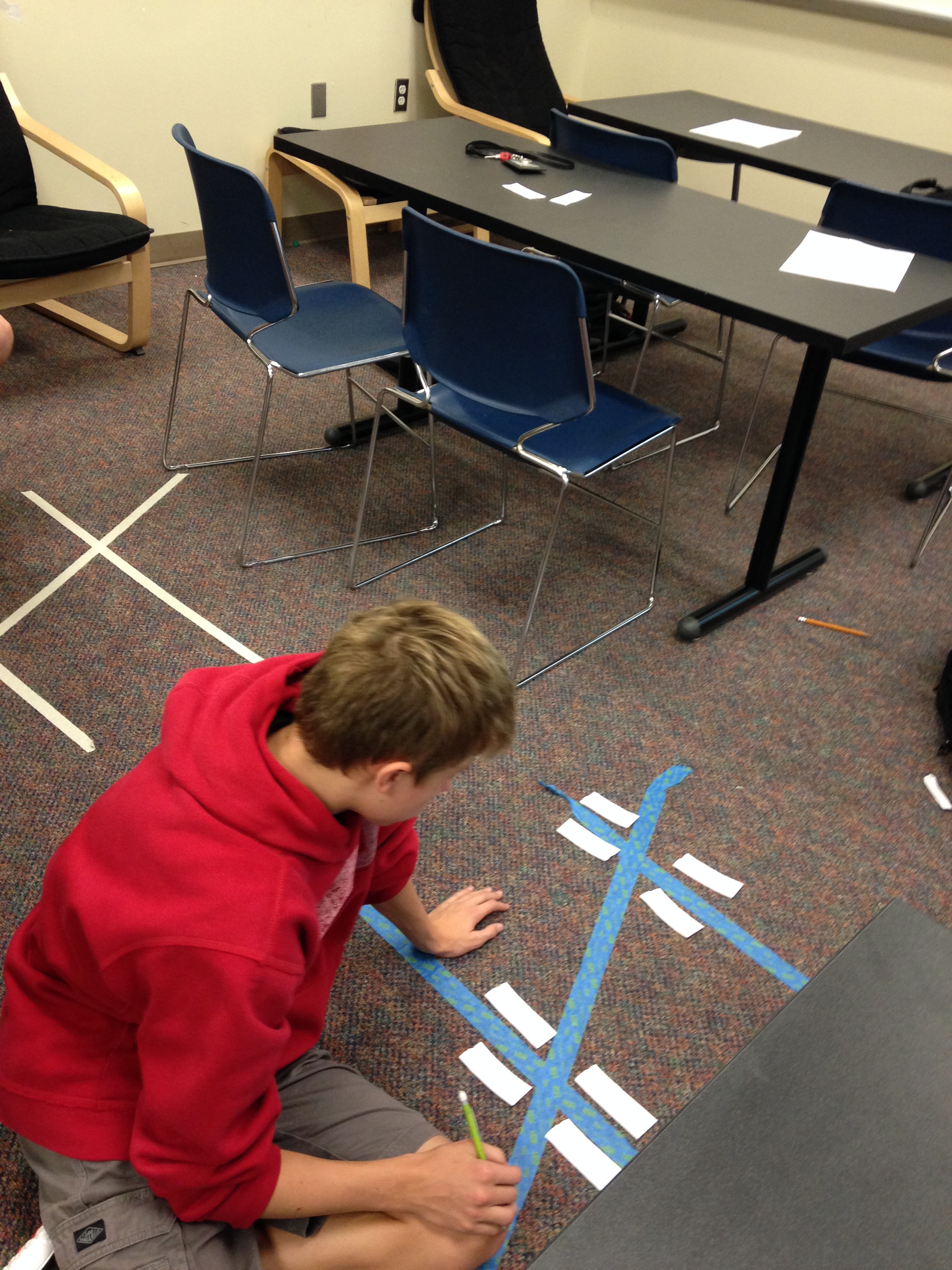
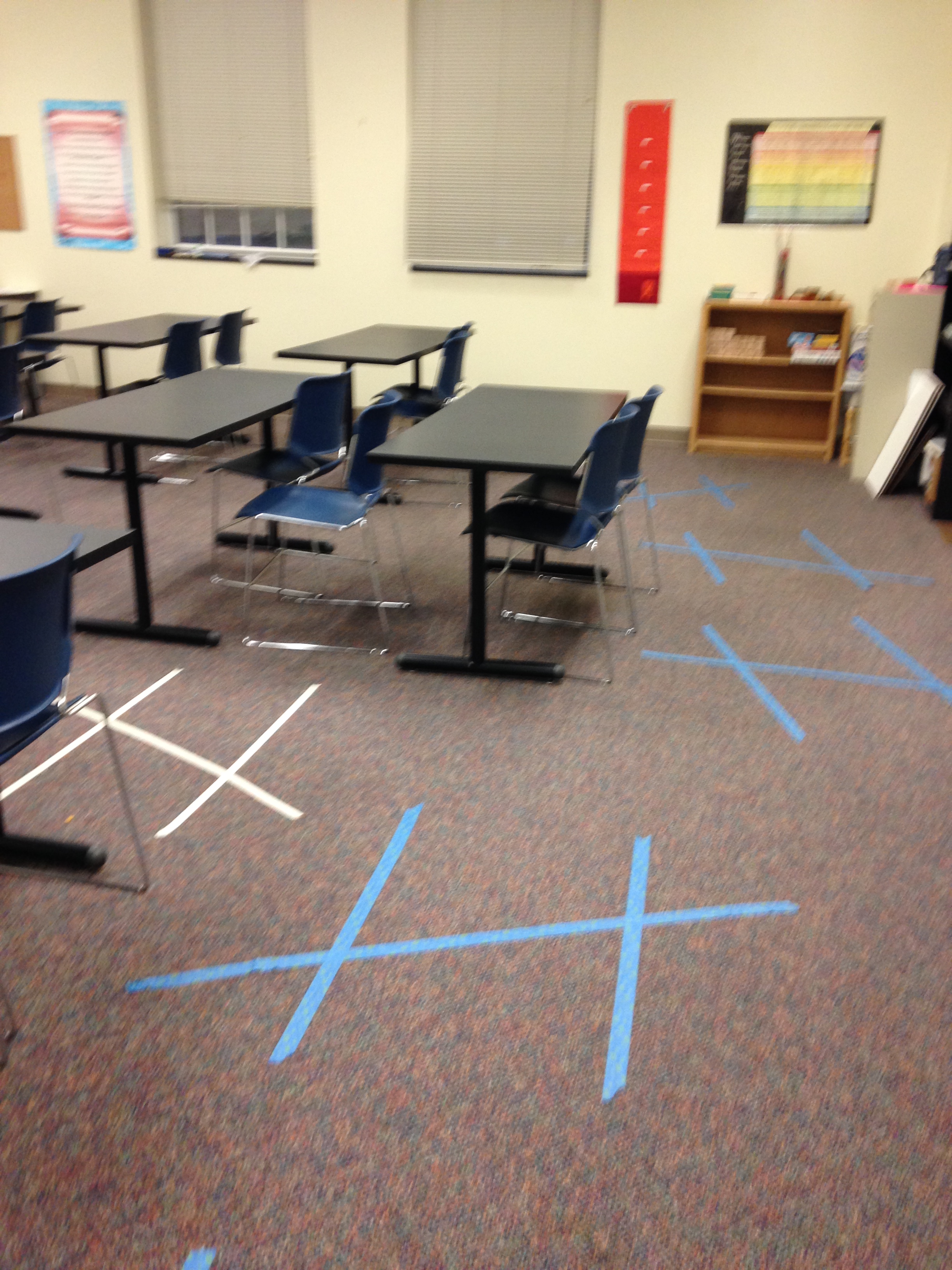
When they all finished we trashed the scraps and had 10 rounds of dance dance transversal!! We had 10 rounds and partners switched every other round. This made properties of parallel lines so much fun!! Check out my instagram for videos of my students dancing!!!
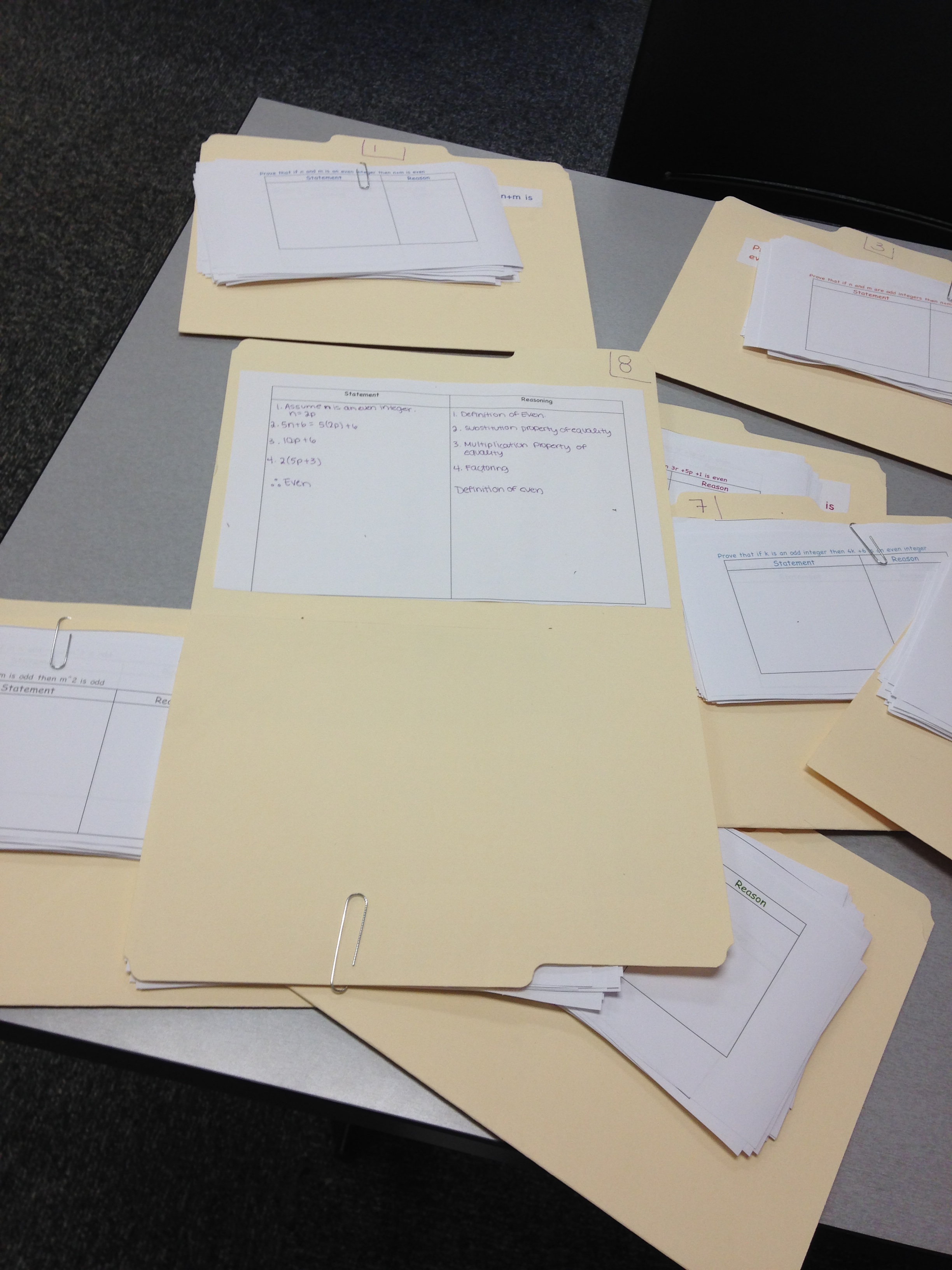
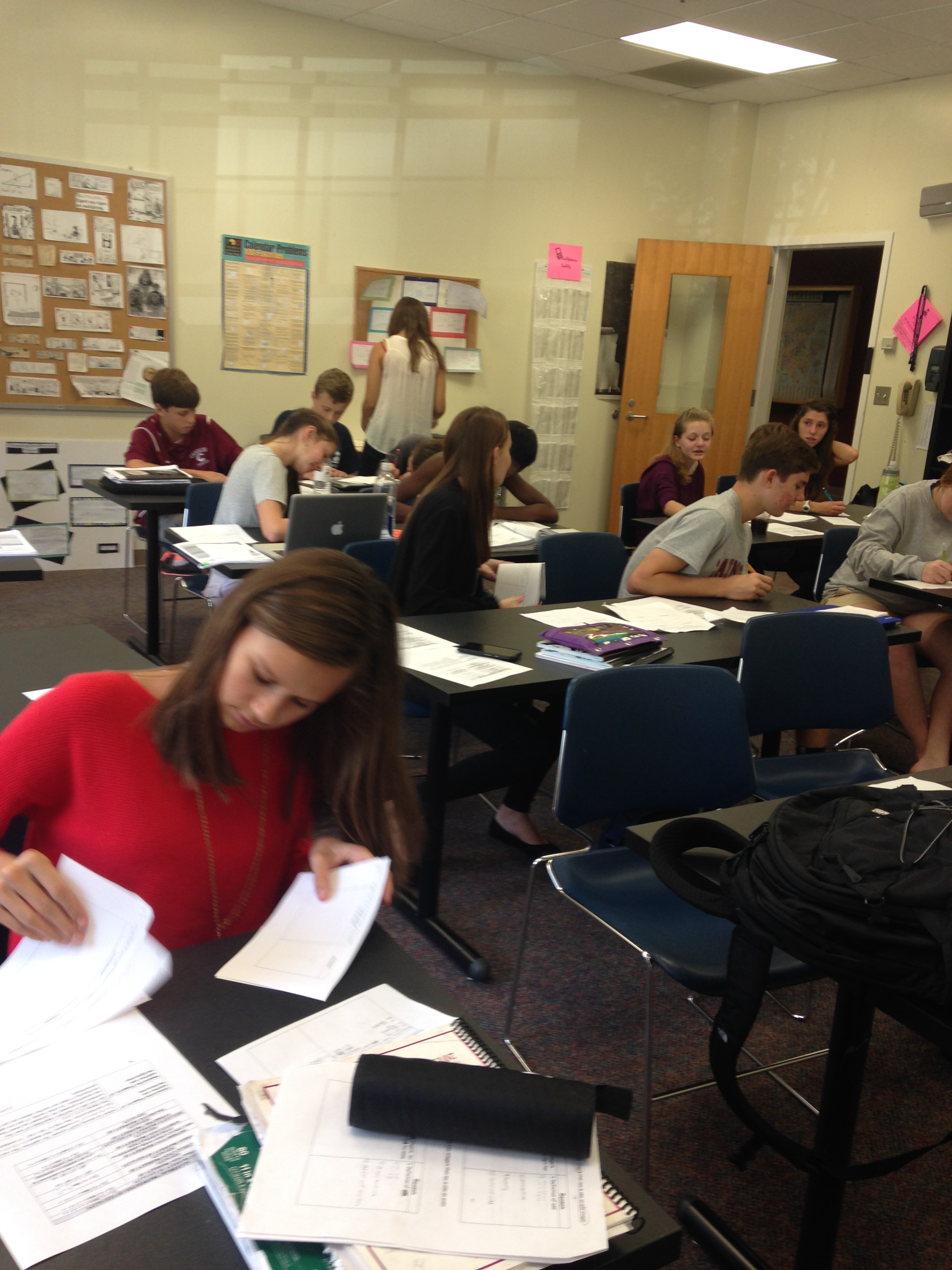
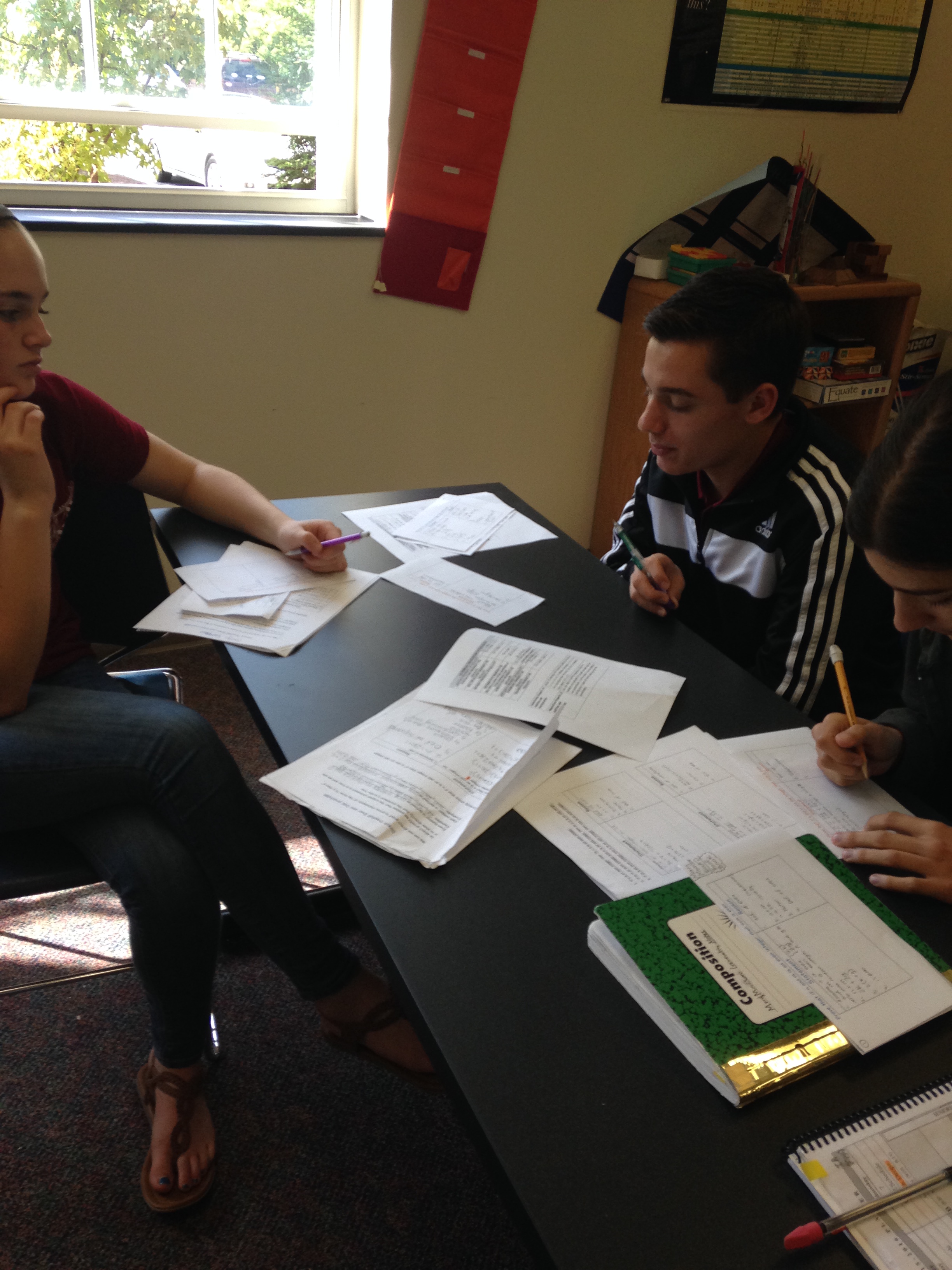
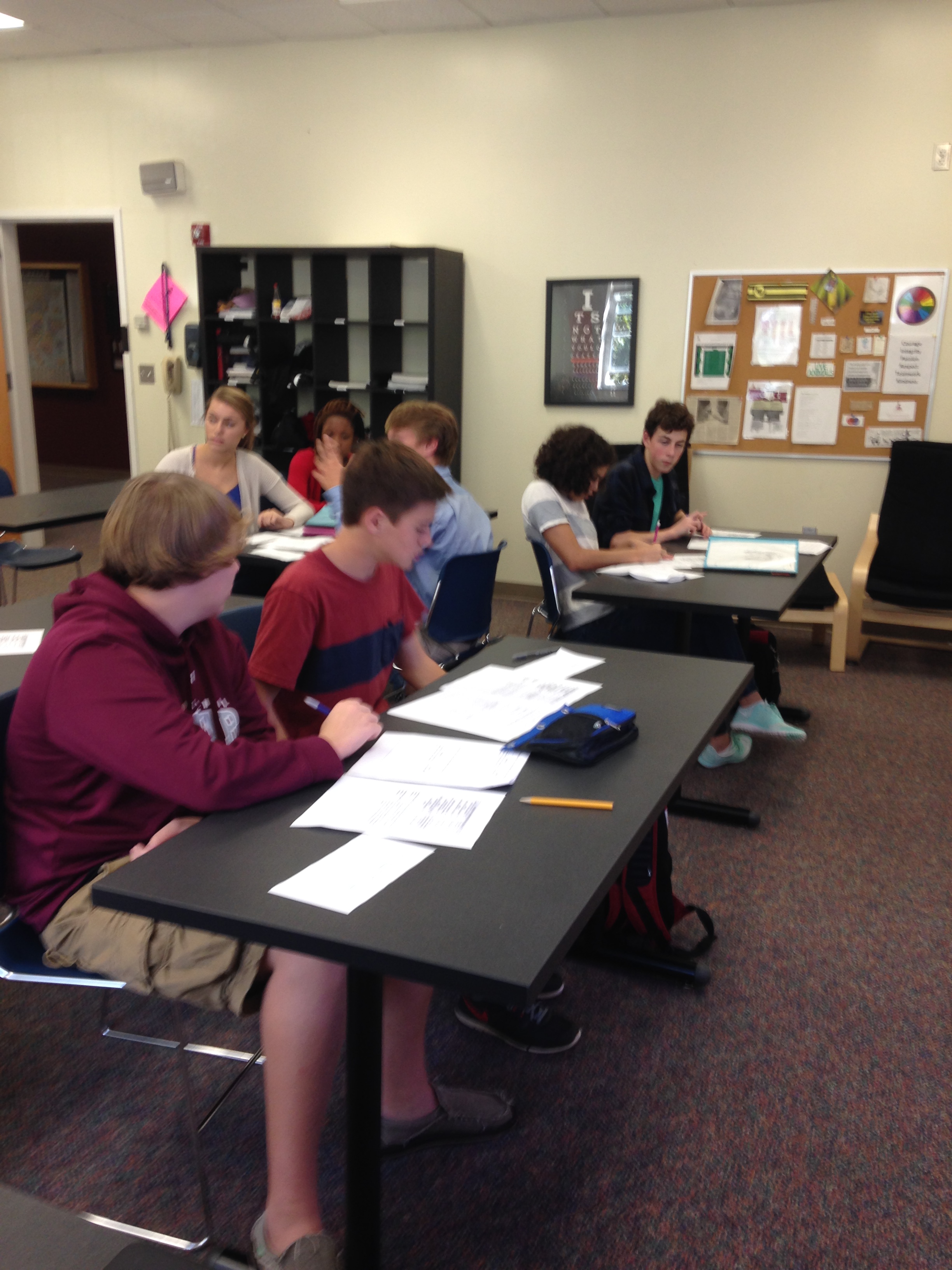
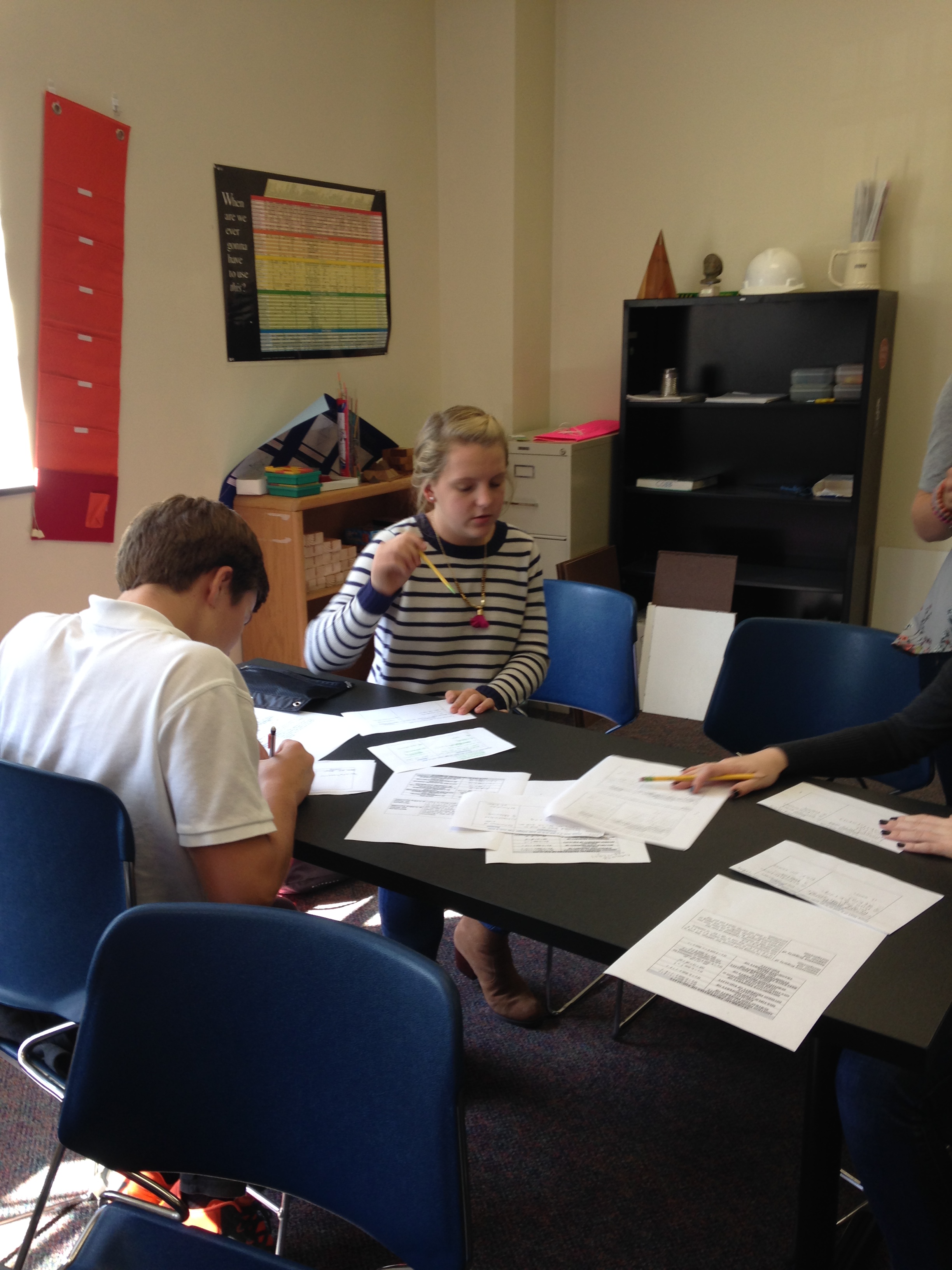

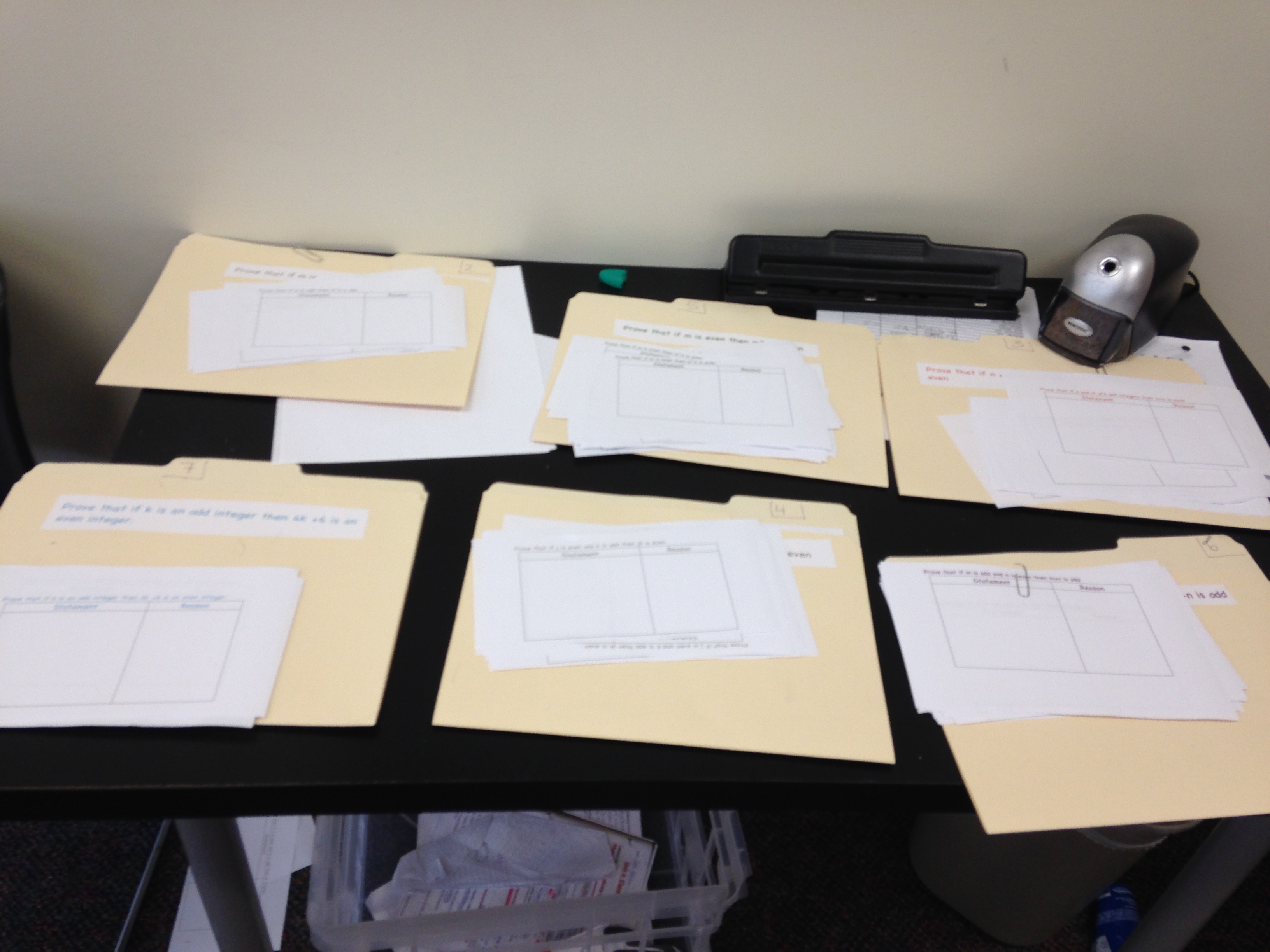


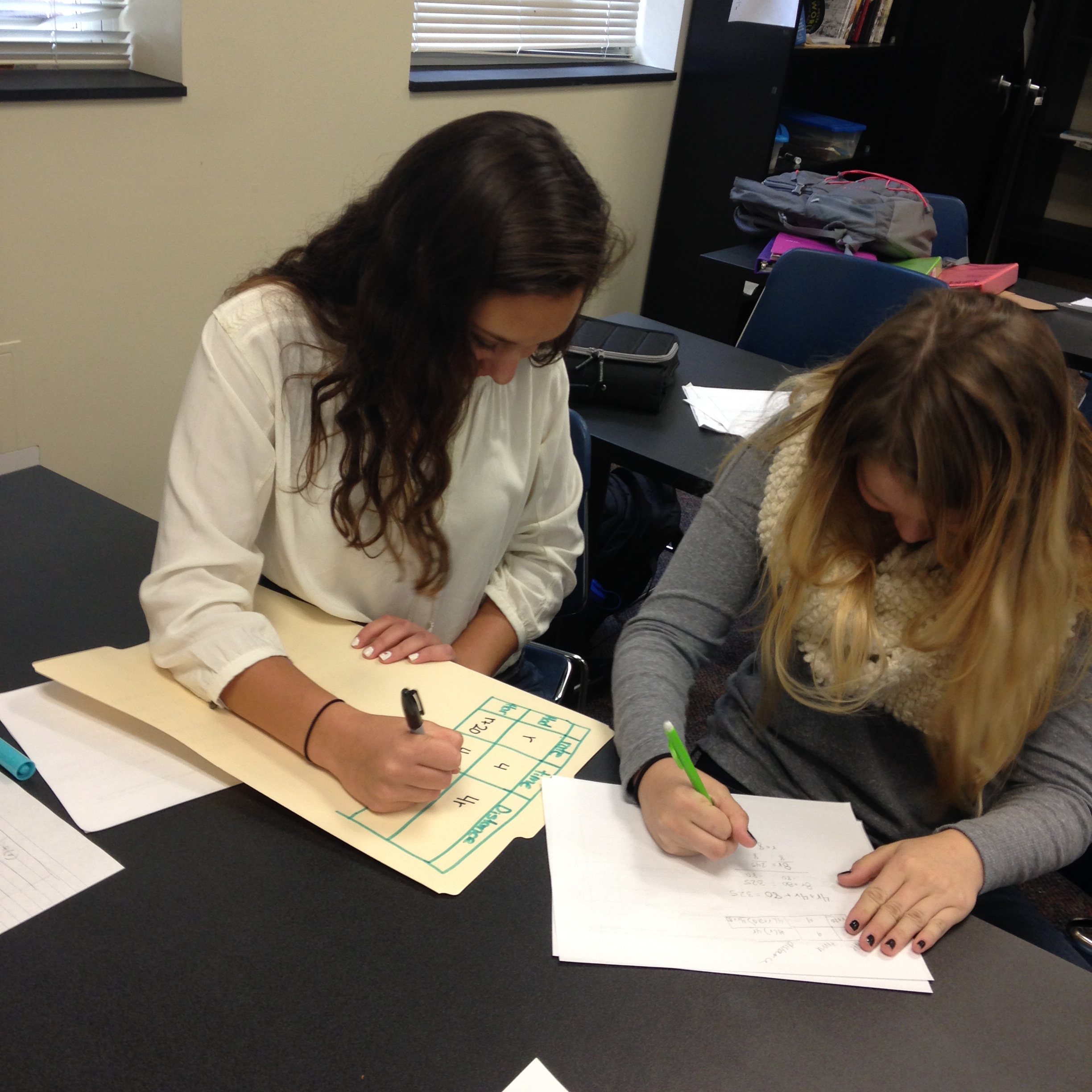
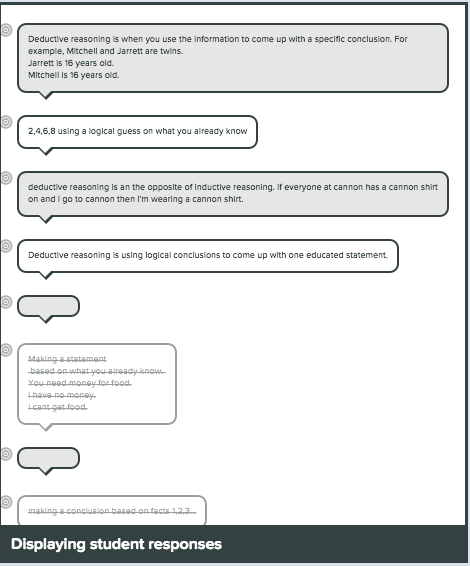



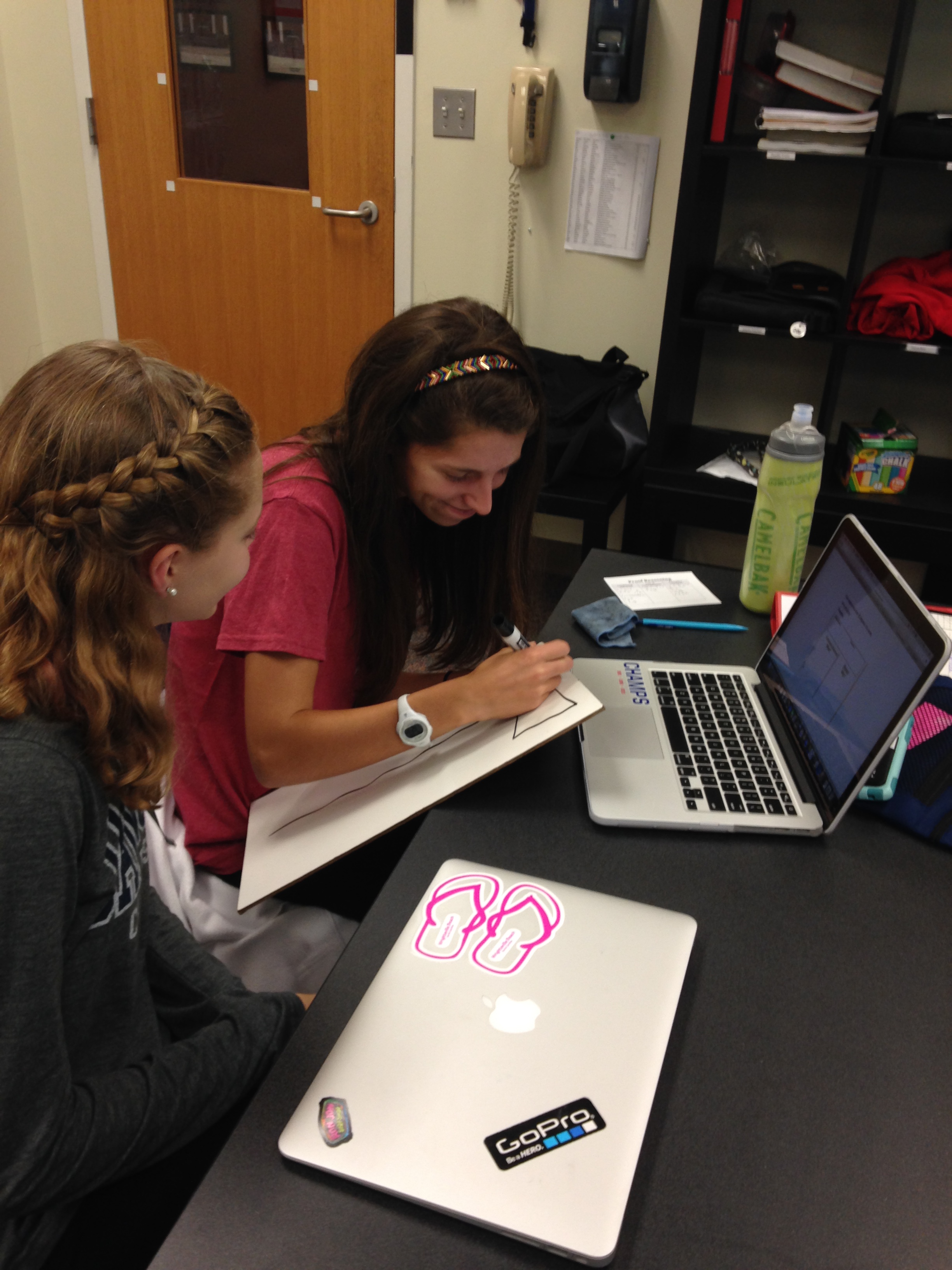
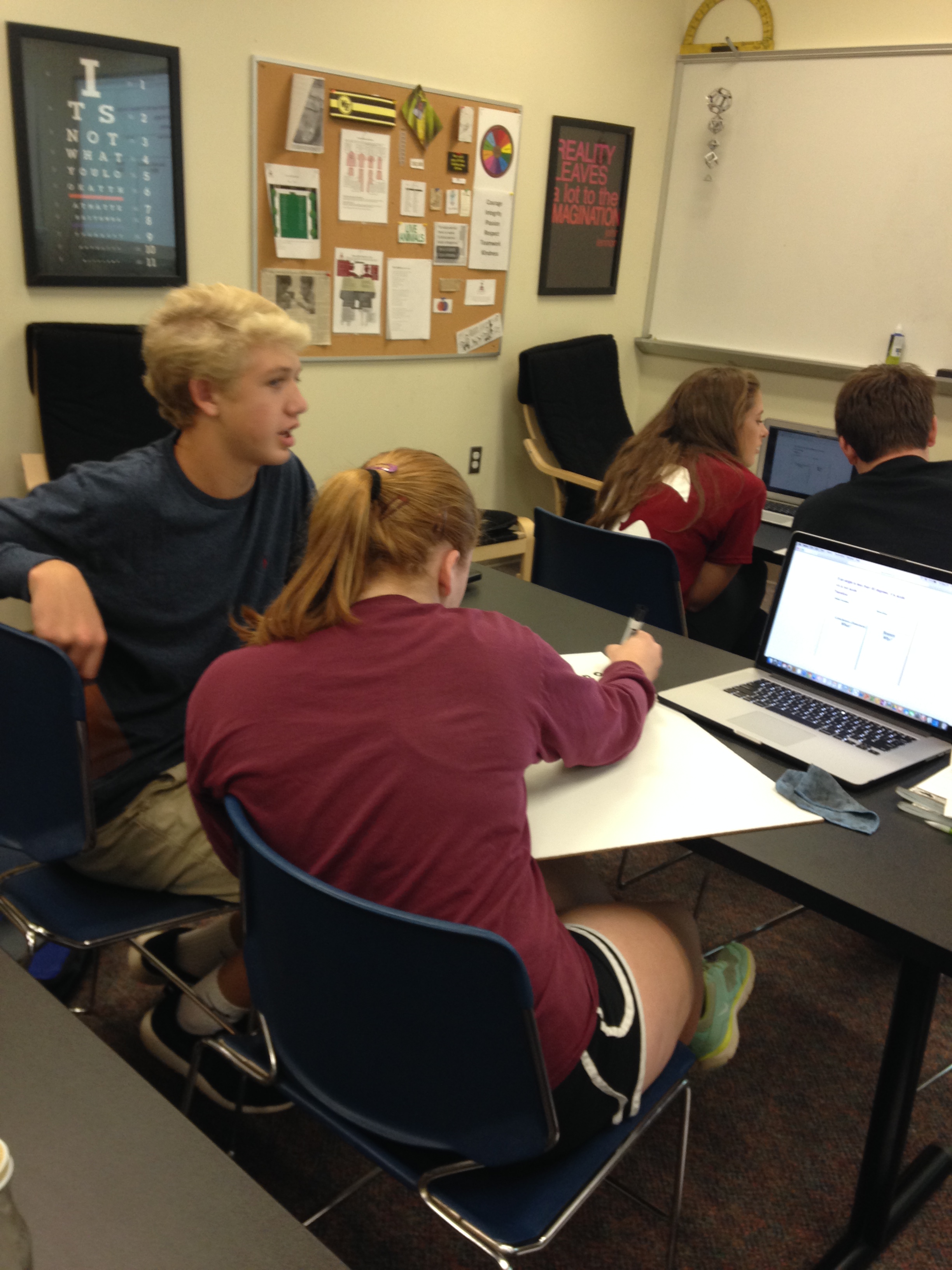
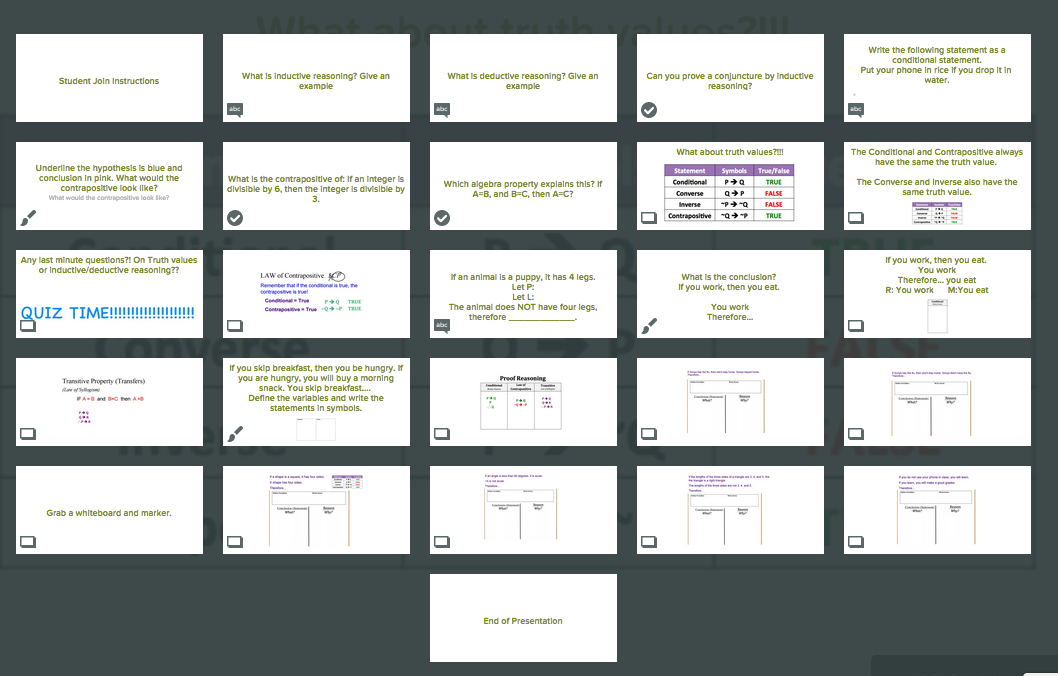

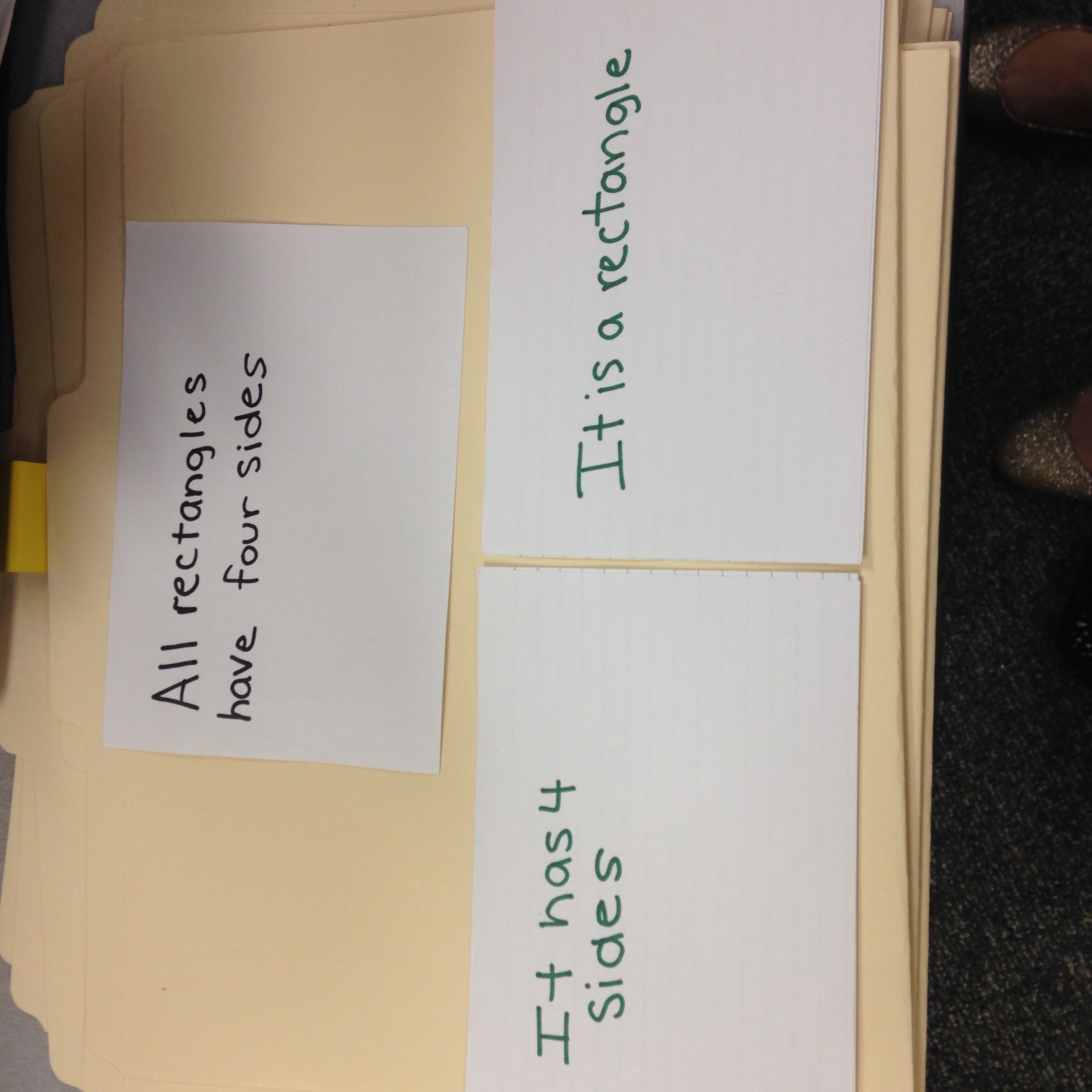


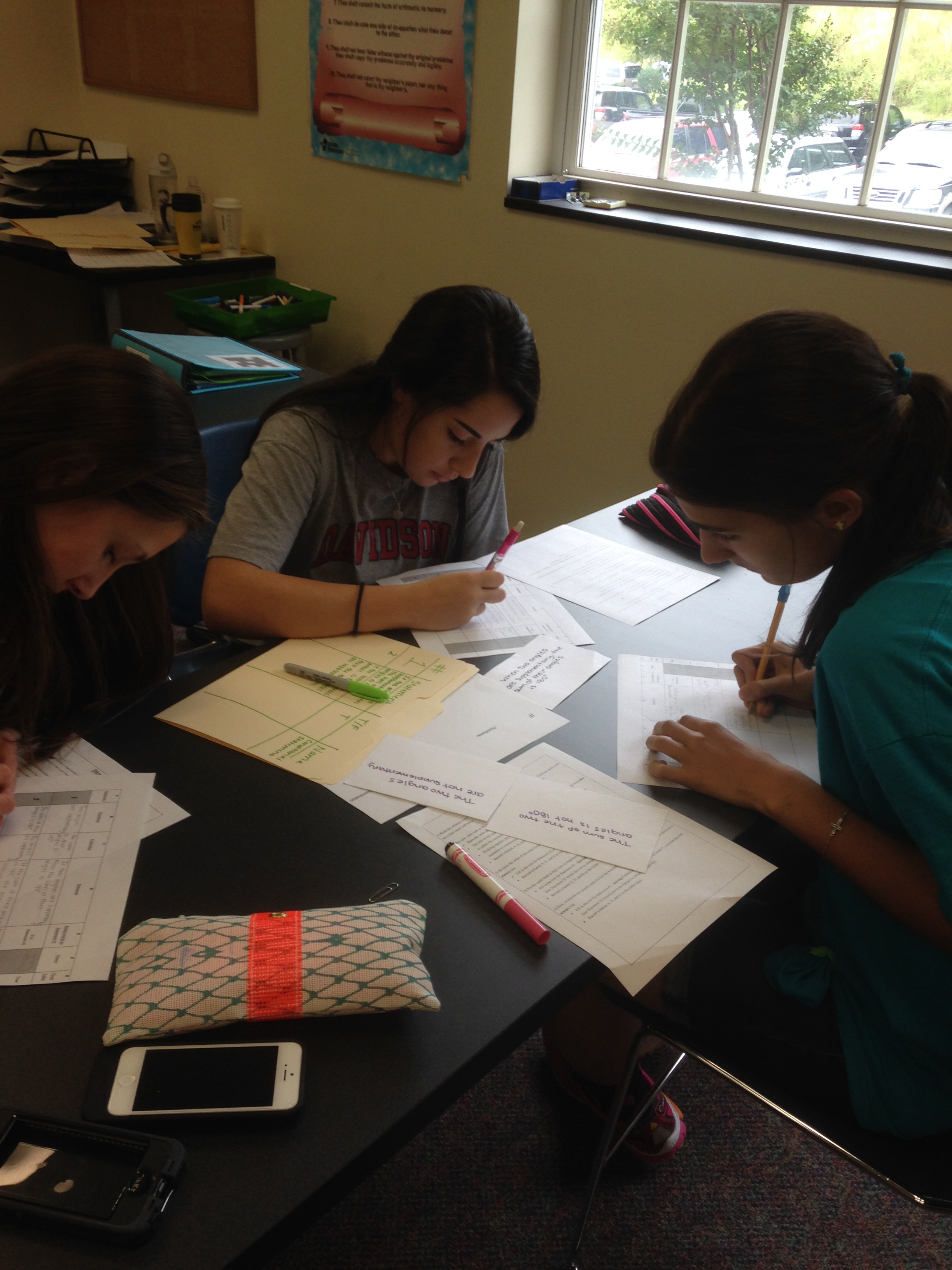
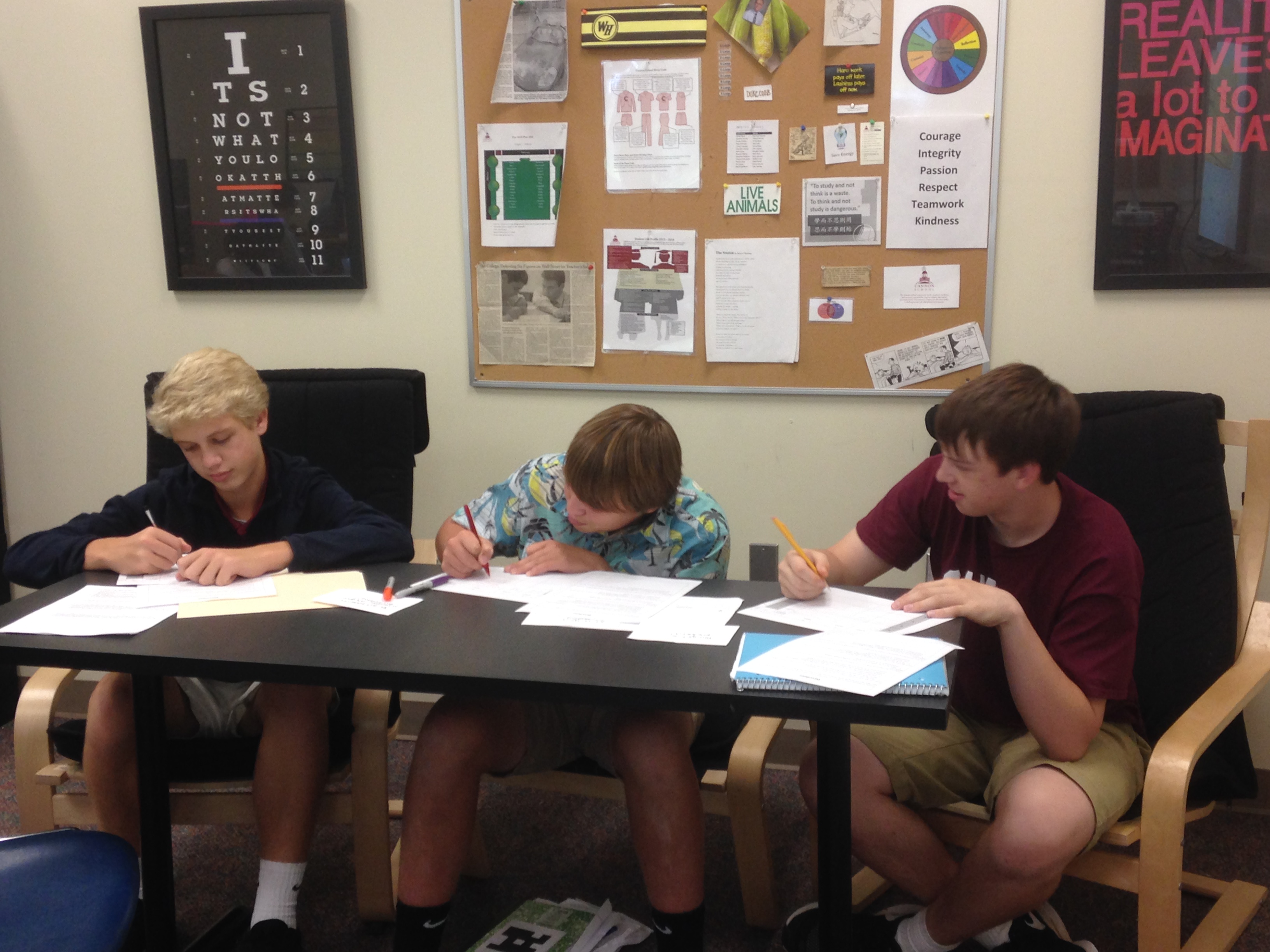
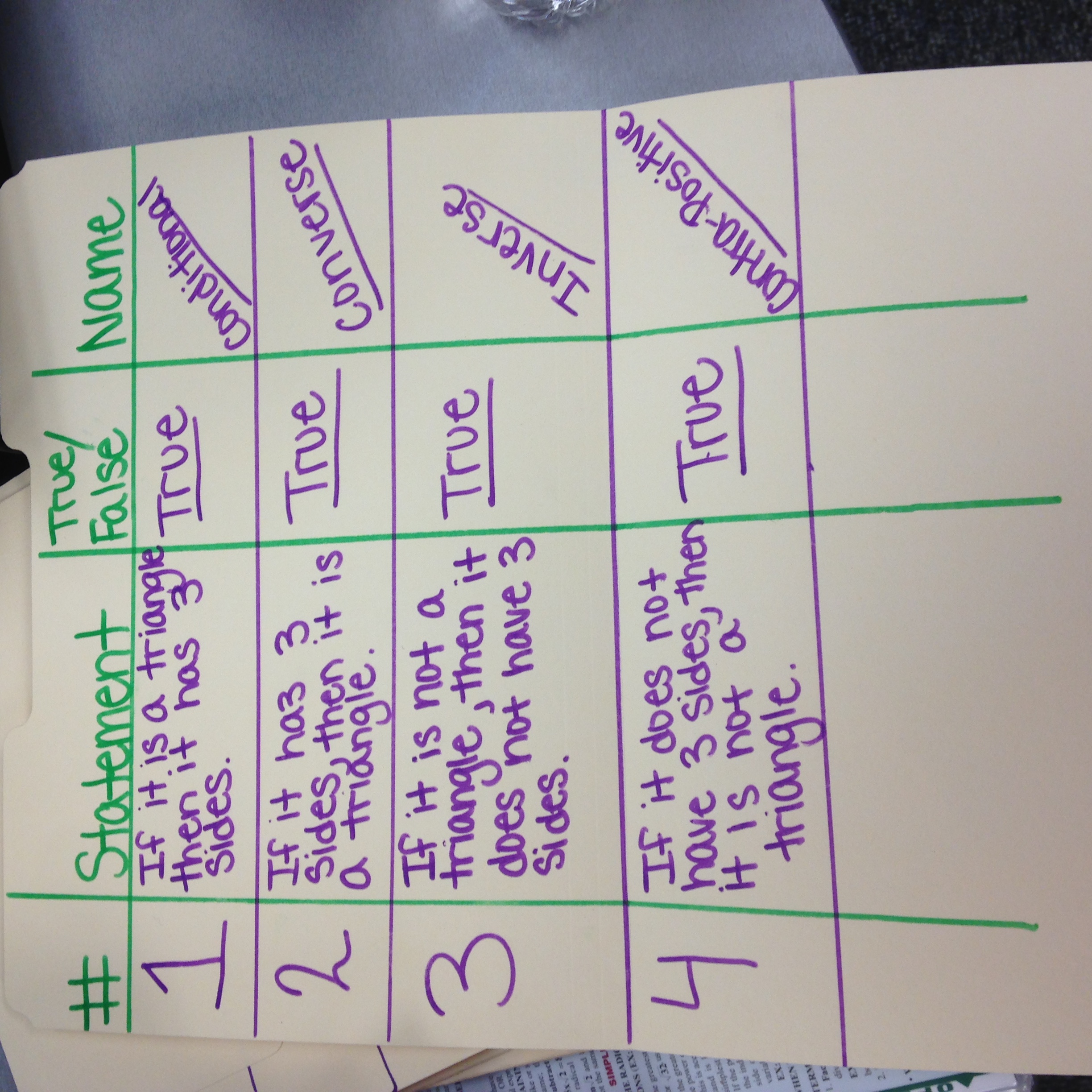

 age to my students. The language of math. I started out this unit with a lesson on inductive and deductive reason that was created by

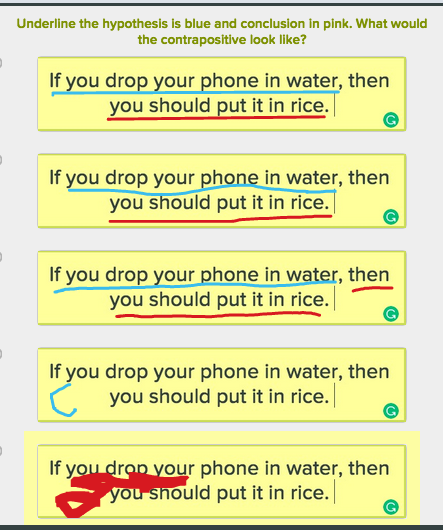
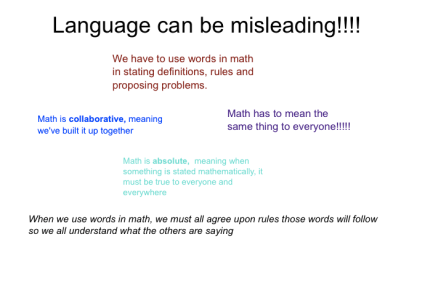 efore even introducing Conditional statements I had my students write 3 if-then rules that they live by. I then had 3 students to come to the board to write their rules. When I finally did introduce conditional statements we us
 ed my students rules to point out the hypothesis and conclusion of each statement. This was good because the students felt by looking at their own rules. I also had students come up to the board and underline and label the hypothesis and conclusion. This got my students up and moving around the room. During a class that is mostly lecture it can be hard to keep students engaged. I tried my best to keep students moving and involved in the notes.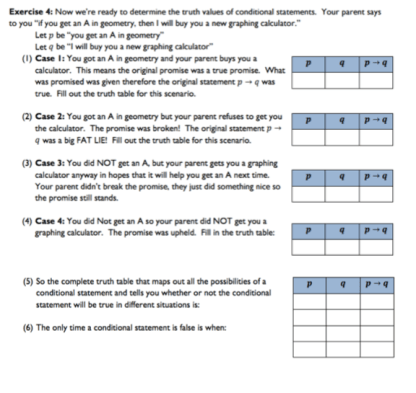
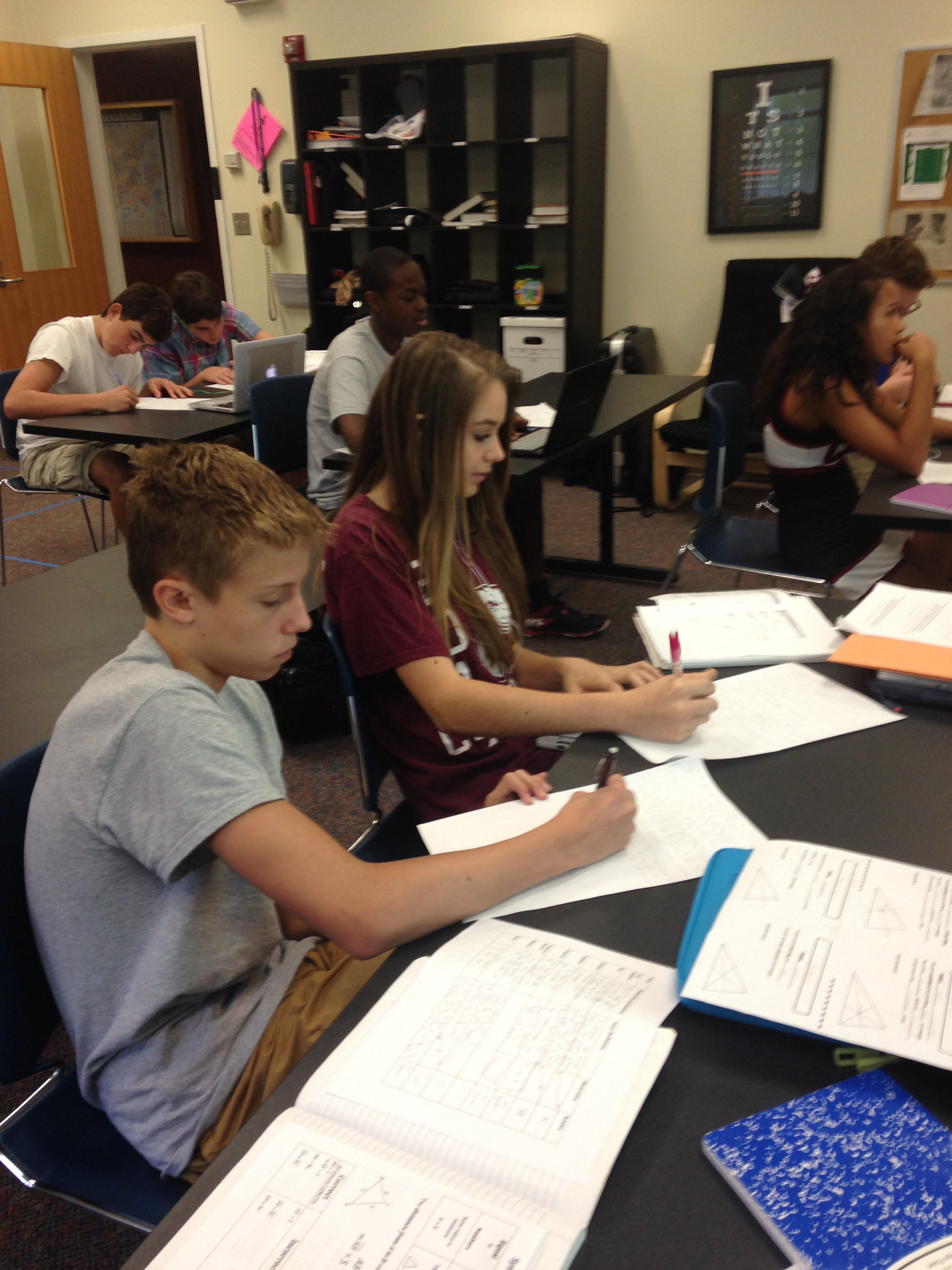

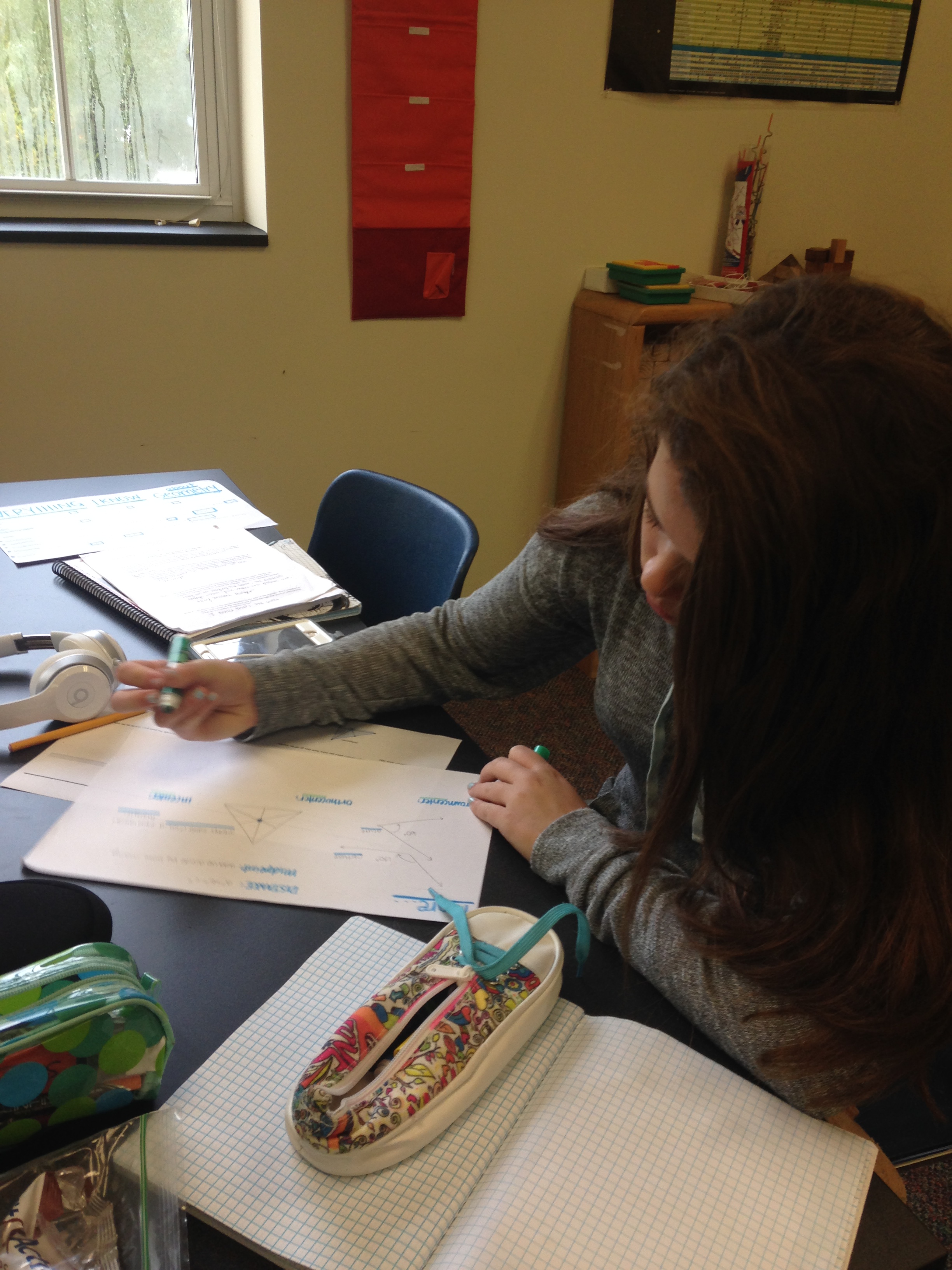







 Designated Deriver